

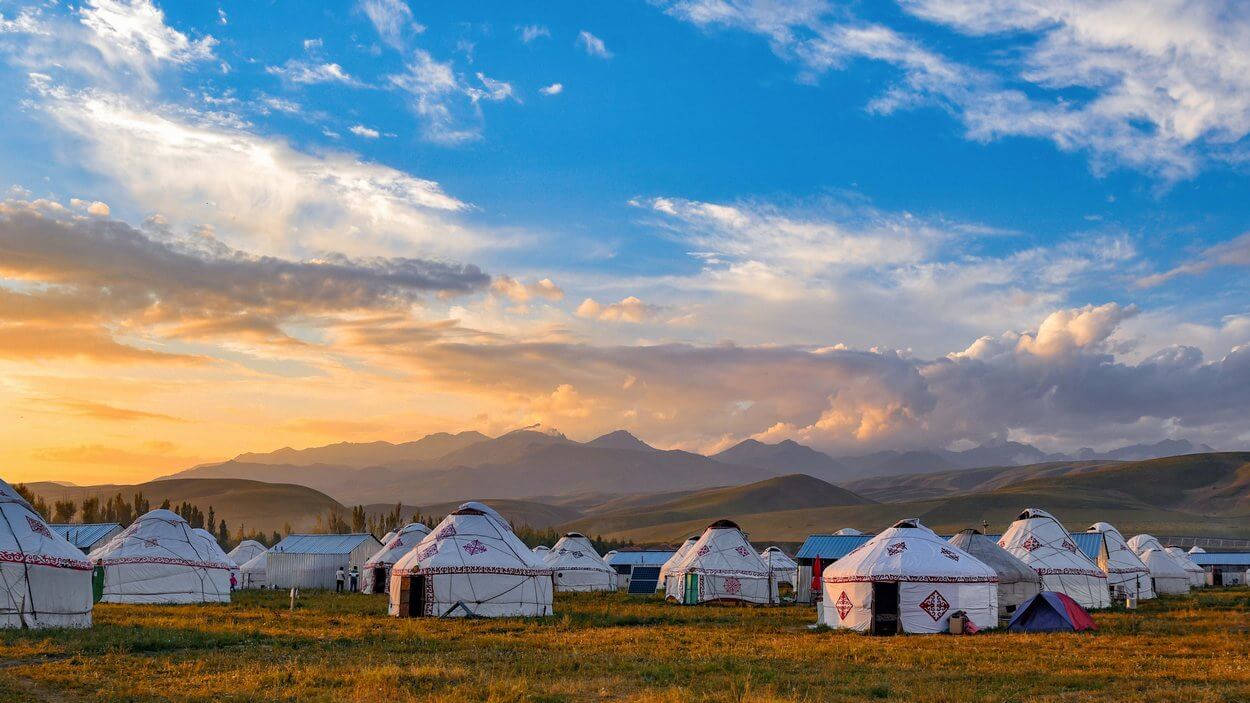
Let's rewind to an ancient time when yurts were the literal home sweet home for Mongolian nomads. Think vast, sweeping grasslands, towering mountains, and—just for fun—imagine Genghis Khan hanging out in one.
Yurts, or ger as the Mongolians call them, are far more than just fancy glamping tents. They are the product of centuries of adaptation to one of the harshest climates on Earth. These wonders of design have withstood everything nature throws at them while keeping their inhabitants cozy, safe, and dry.
While "yurt" is the more widely known term, “ger” literally means “home" in Mongolian, which gives you an idea of how essential these structures have been. In this article, we'll explore the fascinating history, ingenious design, and deep cultural significance of the yurt, tracing its journey from the ancient steppes to the modern luxury resort.
Yurt Origin and History: A Home Born on the Steppes
The story of the yurt begins nearly 3,000 years ago, born from the needs of Central Asian nomads. The first accounts of the trellis-walled yurt date back to the sixth century, when Turkic nomads introduced it to the region. Early adopters like the Khitan and Uyghur tribes developed increasingly ornate styles, but the yurt's core purpose remained the same: it was a durable, portable home perfectly adapted to the harsh weather, essential for tribes traveling with their herds.
This ingenious design was instrumental during the Mongol Empire in the 13th century. Genghis Khan's armies were always on the move, and they used collapsible yurts for everything from campaign headquarters to administrative centers. The ability to pack up their dwellings and travel seamlessly across large expanses was a vital part of the Mongol military strategy, allowing them to shift entire villages at a moment's notice.
The Genius of the Traditional Yurt Design
A traditional yurt is a masterpiece of engineering where practicality, sustainability, and culture intersect.
Anatomy of a Survivor
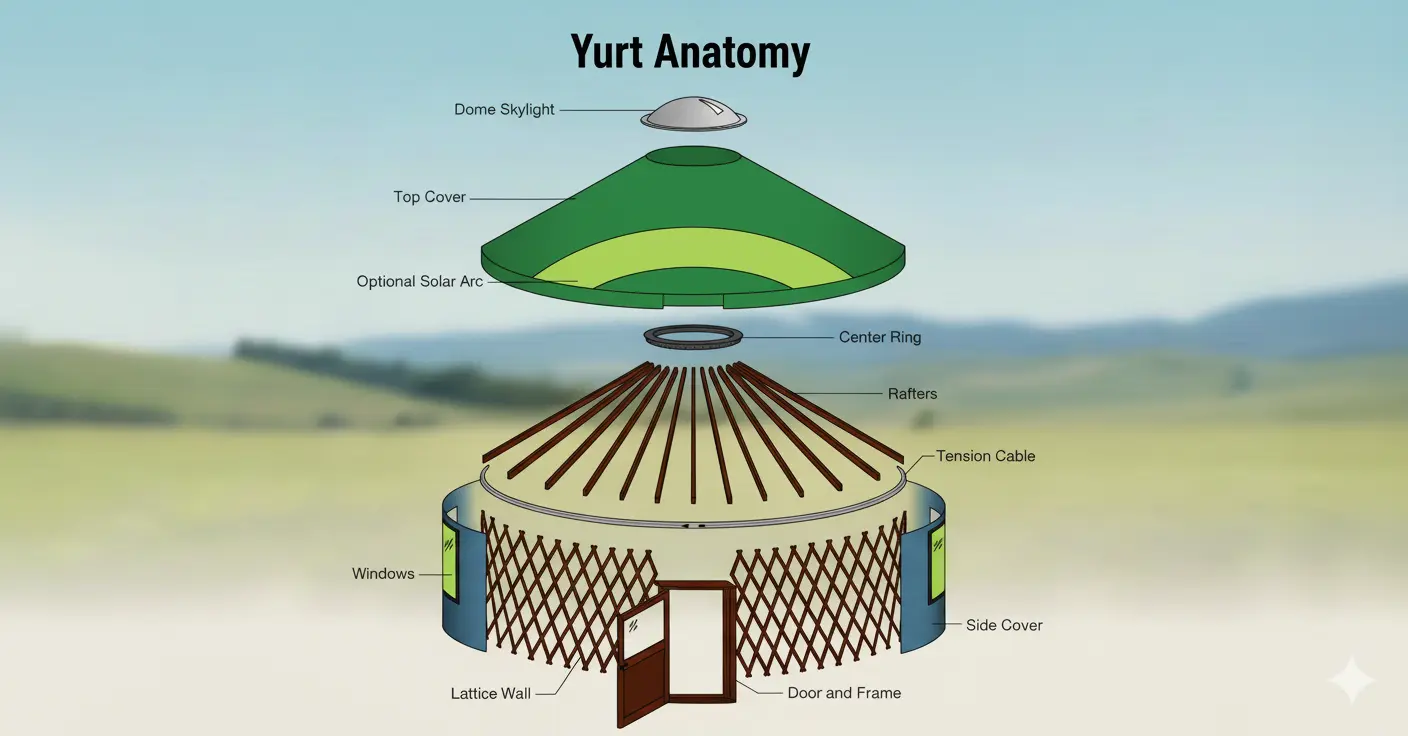
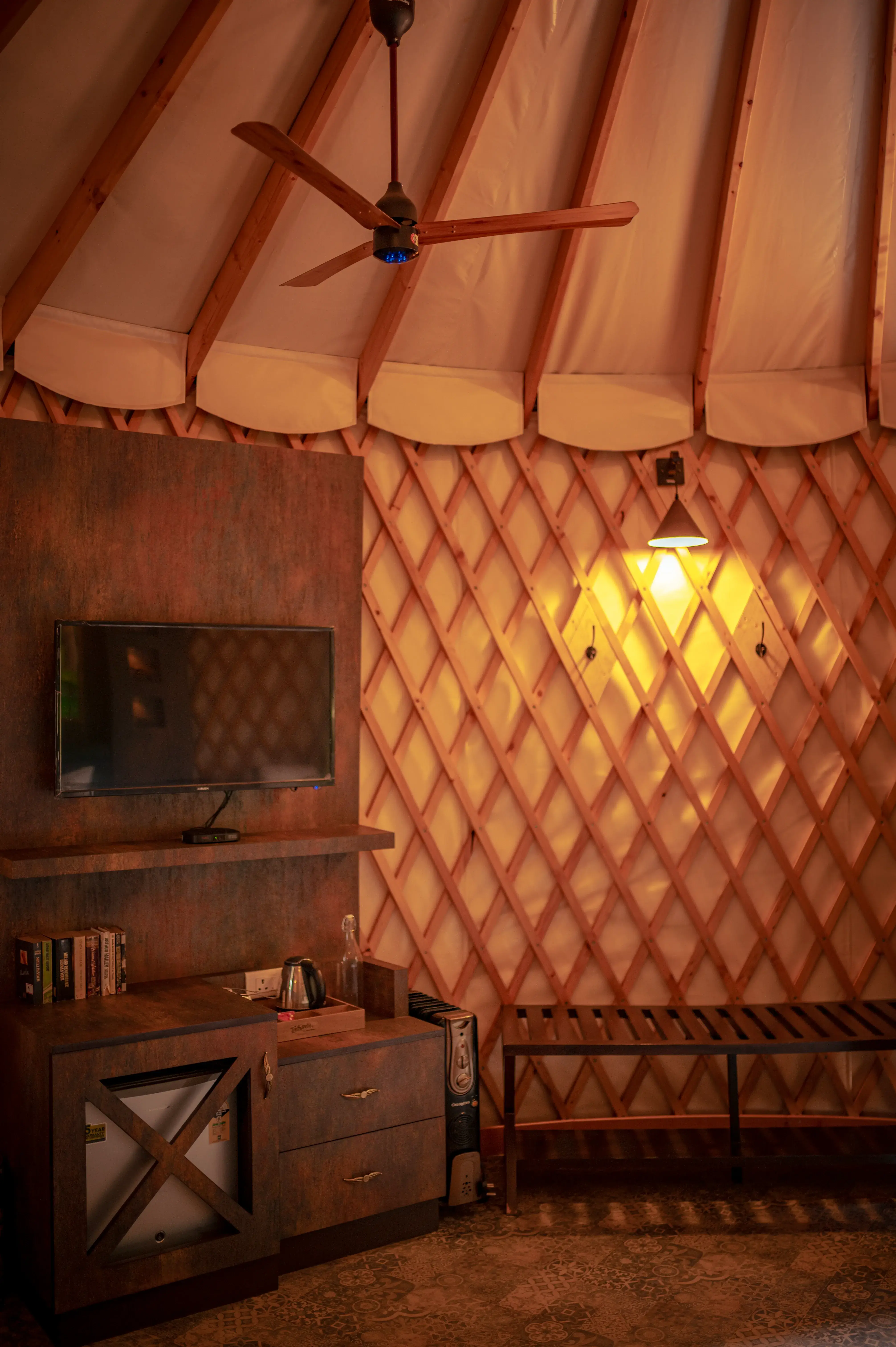
Traditional yurt construction involves a flexible wooden frame made primarily from straight pieces of wood, such as birch or larch, which are assembled into a latticework called the khana to form the collapsible walls. The roof is created using bent roof poles (rafters) and a central crown (tono), typically constructed by joining multiple straight wooden pieces into a circular shape. According to UNESCO’s description of traditional Kyrgyz and Kazakh yurts, some modern or regional adaptations use steam bending for roof poles or crowns, but this is generally a contemporary technique and not typical of strictly traditional yurts. Insulation is traditionally provided by thick, felted sheep’s wool, which offers excellent protection from both extreme summer heat and severe winter cold.
A Home on Wheels

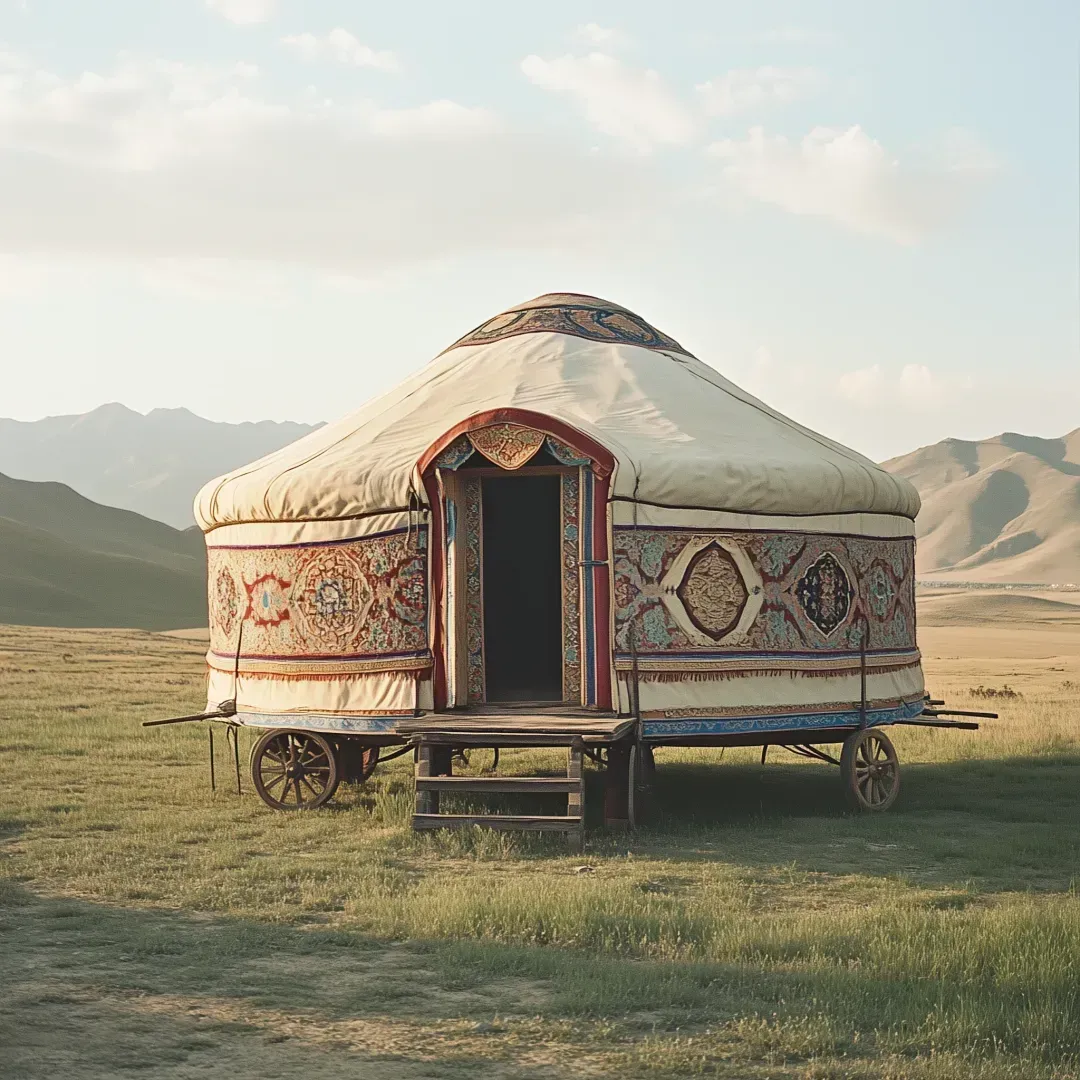
Historically, yurts were highly portable. During the height of the Mongol Empire, they were not only carried but often mounted on enormous carts known as "yurt wagons" or "ger tergen." These mobile homes were particularly important for Mongol chieftains and khans, who required larger, more elaborate yurts. Some were so enormous that they needed up to 22 oxen to pull them across the steppe. The 13th-century explorer William of Rubruck vividly described these carts, noting that Möngke Khan's wife was taken home in one after a gathering. When not on carts, a skilled team could disassemble a standard yurt in as little as 30 minutes, a crucial advantage for a nomadic lifestyle.
More Than a Home: Yurt’s Cultural Significance
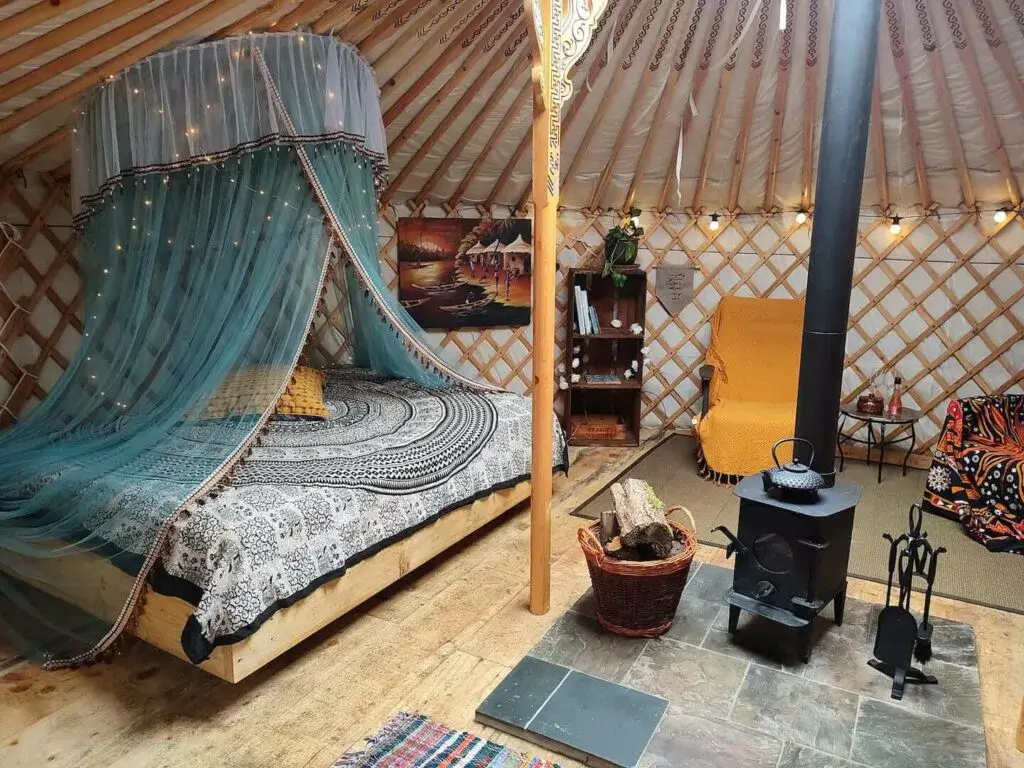
In Mongolian culture, the yurt holds deep significance. Its perfect circular form symbolizes eternity and the sky, concepts central to their spiritual beliefs. There's no hierarchy of rooms; it's a shared space. By tradition, the entrance always faces south, while the north side is reserved for the family's altar and honored guests. It is more than a dwelling; it represents a way of life and the deep connection between people and the land.
Yurt's Journey Across the Globe
So, how did this ancient structure travel from the Mongolian steppes to become a global phenomenon? The journey happened in two major waves: first, an ancient expansion across continents, and second, a modern introduction to the West.
The Ancient Spread: From Asia to the Edge of Europe
The Mongol Empire's tremendous expansion in the 13th century was the primary catalyst for the yurt's spread. As Genghis Khan's armies moved, their mobile homes moved with them, introducing the design throughout Central Asia and as far west as Russia. The yurt's incredible adaptability meant that other nomadic tribes, such as the Kyrgyz, Kazakhs, and Khitans, adopted and modified the design, incorporating it into their own cultures.
This expansion did not go unnoticed by the Western world. Early European travelers were fascinated by these structures. The Italian explorer Giovanni di Pian del Carpine documented them in 1246, and the legendary Marco Polo also noted them during his travels in the late 13th century. For centuries, the yurt stood as a powerful symbol of nomadic survival and ingenuity across the steppes, deserts, and mountains of Central Asia.
The Modern Leap: From Nomads to North America
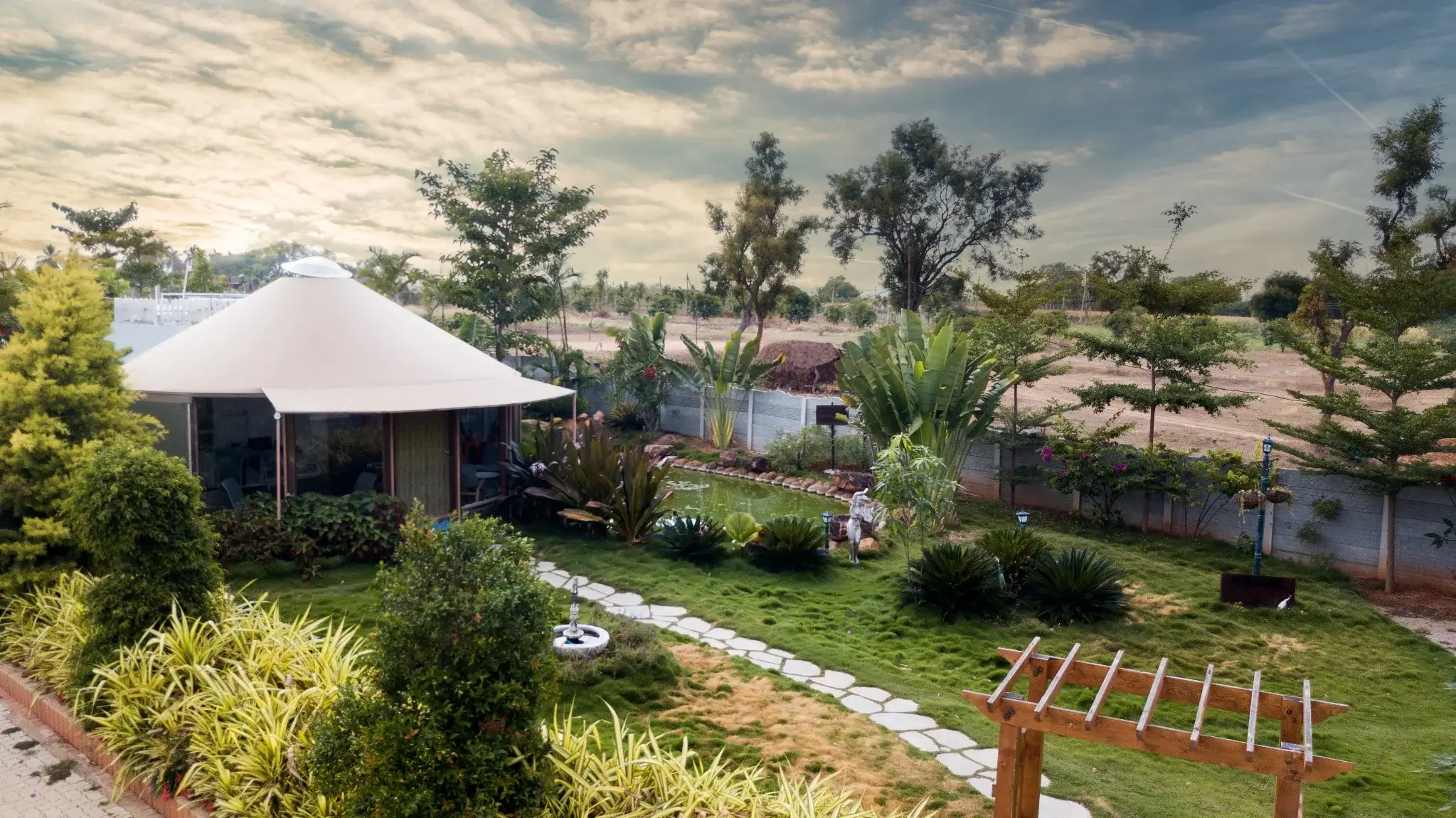
For hundreds of years, the yurt remained a distant curiosity to the West. The question is, how did we go from Mongolian nomads to modern-day glamping?
The answer, surprisingly, starts with one man. In the 1960s, a visionary American named William S. Coperthwaite discovered the yurt while studying traditional structures. He was captivated by its elegance and efficiency and decided to bring the concept to the United States. With a few modern updates—like adding larger windows, a taller door, and using different materials for the frame and cover—he revolutionized the design while staying true to its ancient roots.
Coperthwaite's modern yurt became incredibly popular in the hippie culture of the '70s. For a generation focused on simple living, sustainability, and a deeper connection to nature, the yurt was the perfect physical expression of their ideals. Let's face it, who wouldn't love living in a space so open and connected to nature?
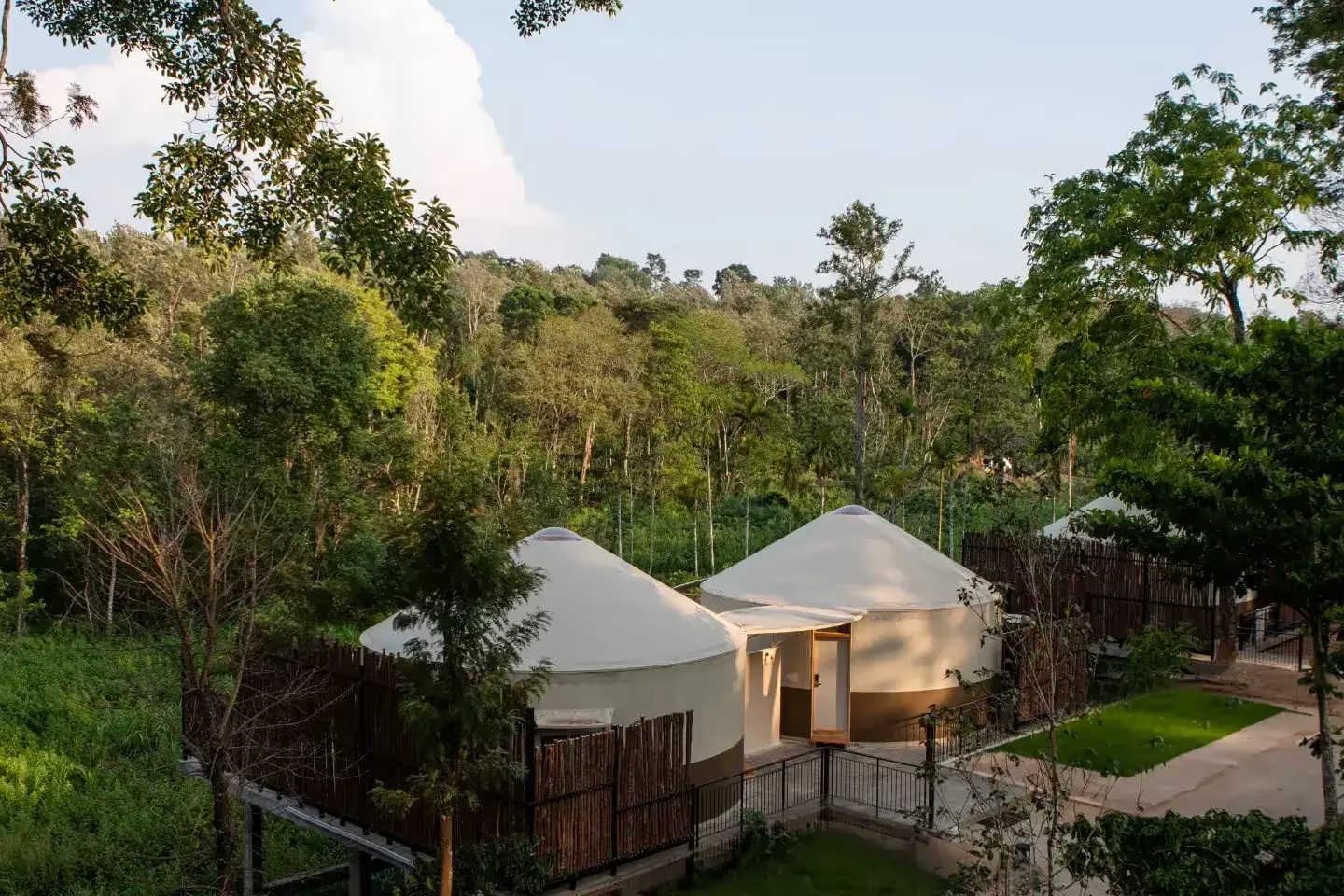
Fast forward to today, and you have manufacturers like The Out Factory (hey, that's us!) taking this timeless design and launching its next evolution. We are turning it into something you can fully customize to fit your resort's aesthetic, vibe, and guest expectations, transforming it from a counter-culture icon into a mainstream luxury experience.
The Glamping Boom & The Modern Yurt
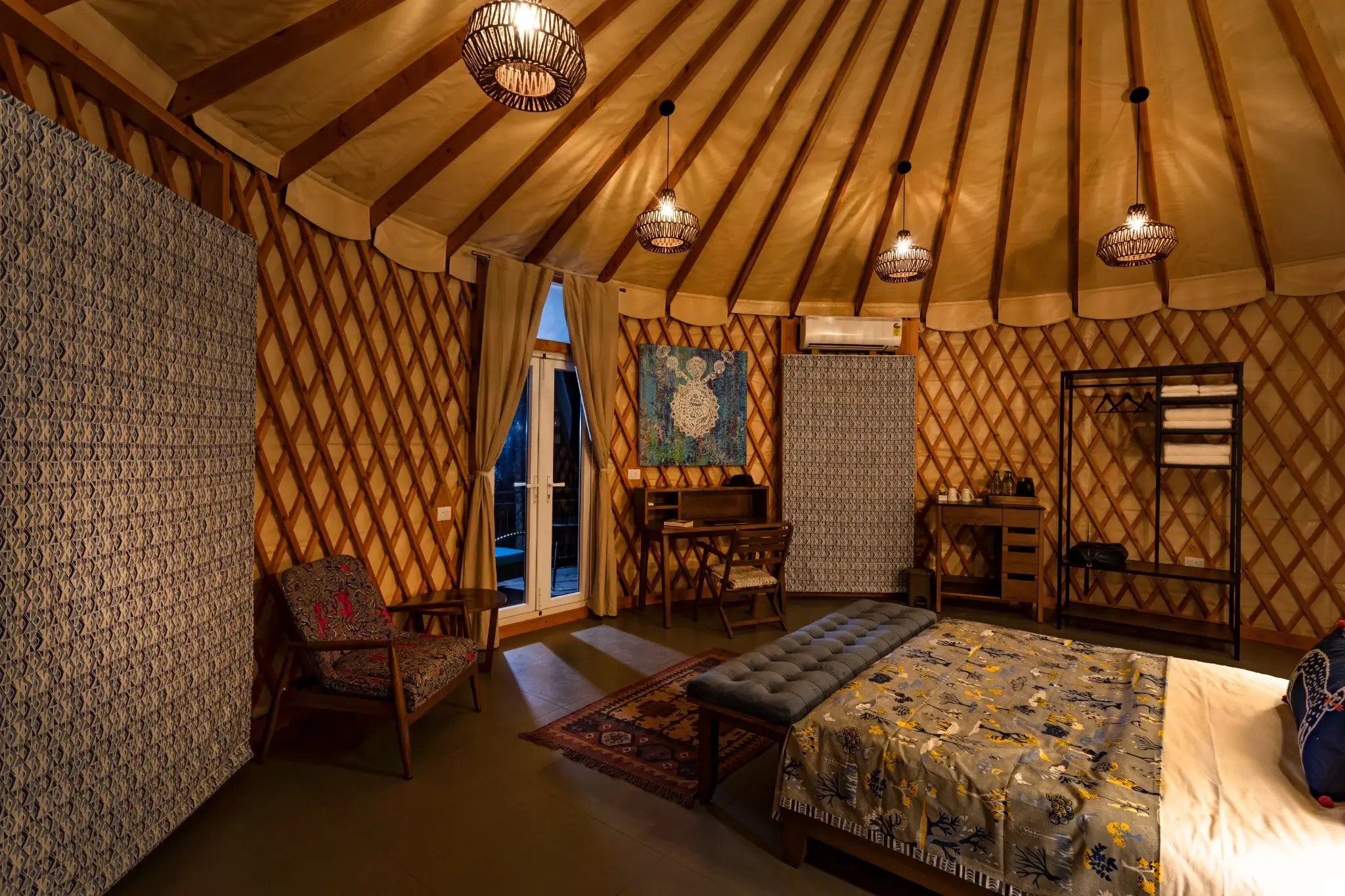
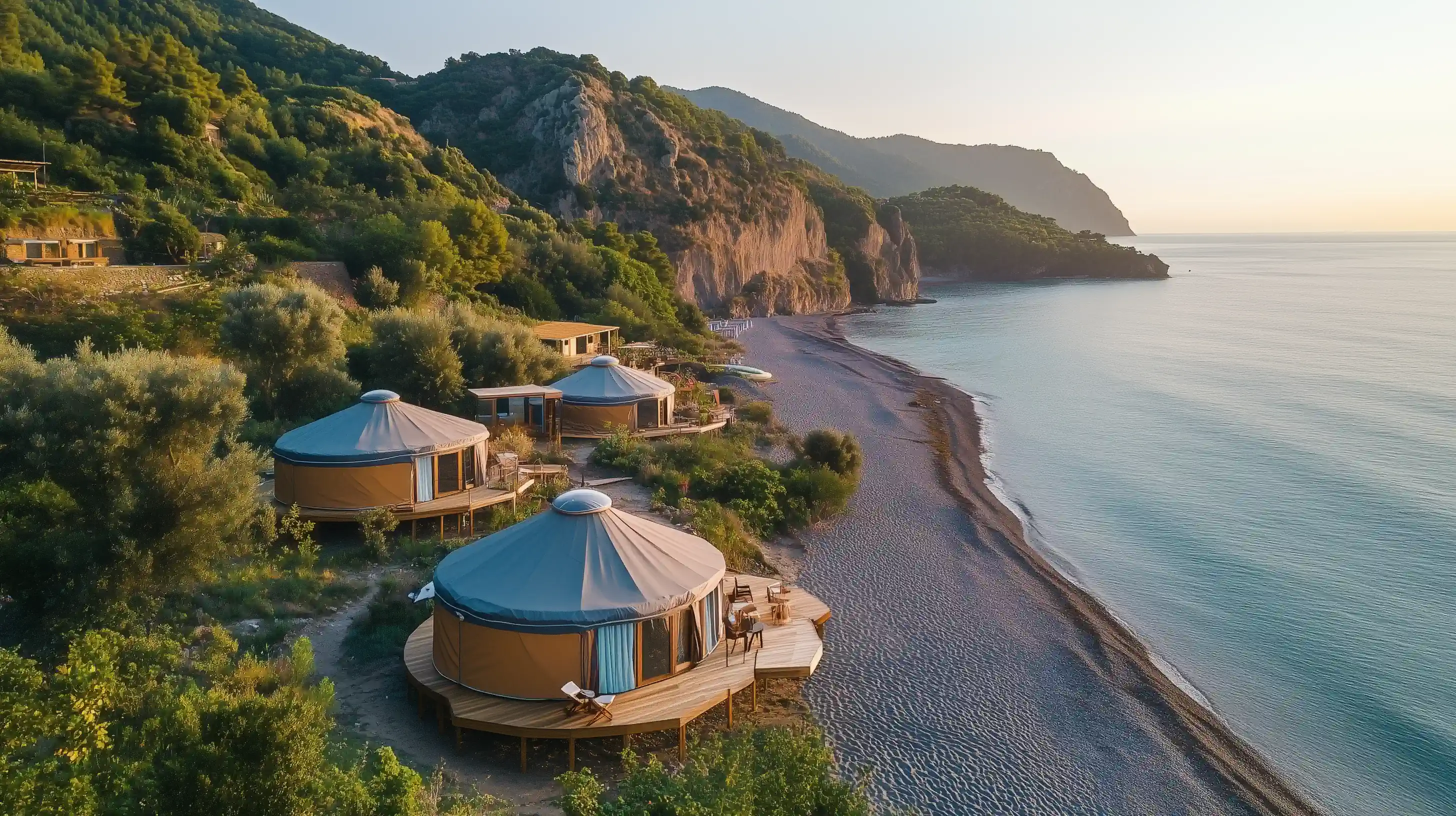
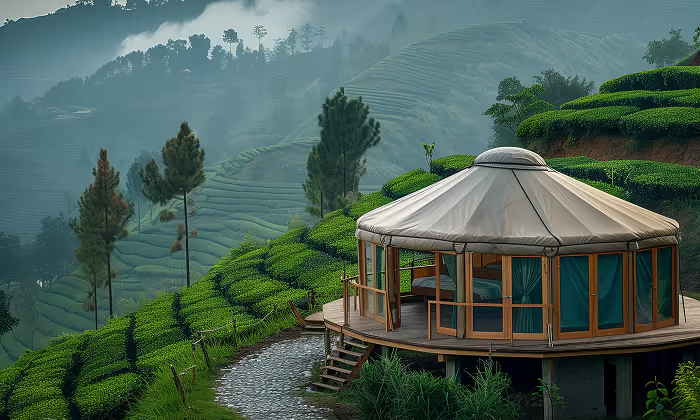
Yurts aren't just a cool piece of history—they're a major trend. The glamping boom is real, and travelers are looking for something more than just a place to sleep. They want an experience, a connection to nature without losing the comfort and luxury they're used to.
And that's where the modern yurt comes in:
- Unique Experience: Imagine your guests waking up in a round, cozy, wooden structure, listening to the sounds of nature, without sacrificing the comforts of a high-end hotel. That's a memory that sticks.
- Sustainability: Modern yurts, while using advanced materials, still require fewer resources than traditional buildings. They blend into the landscape rather than disrupting it.
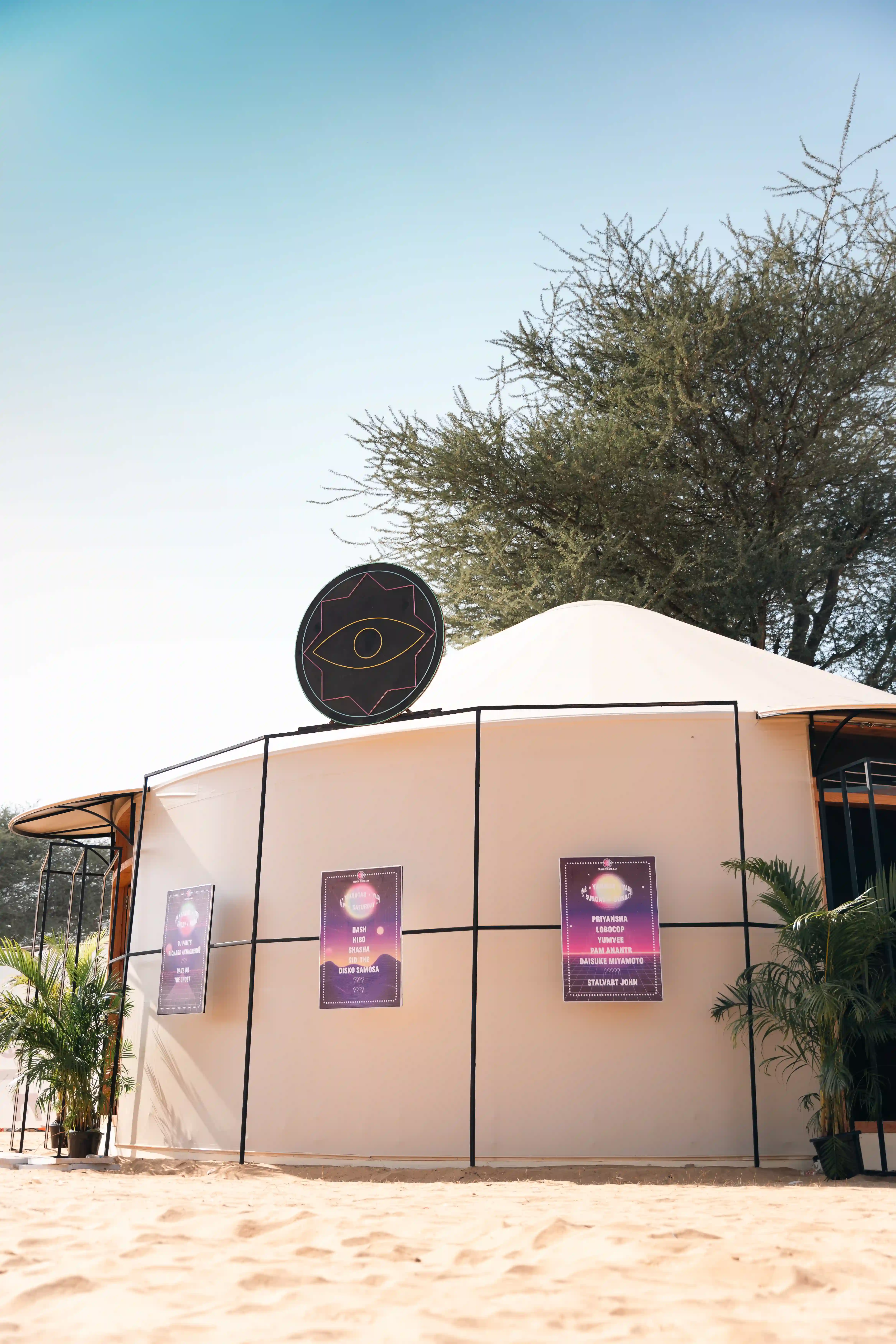
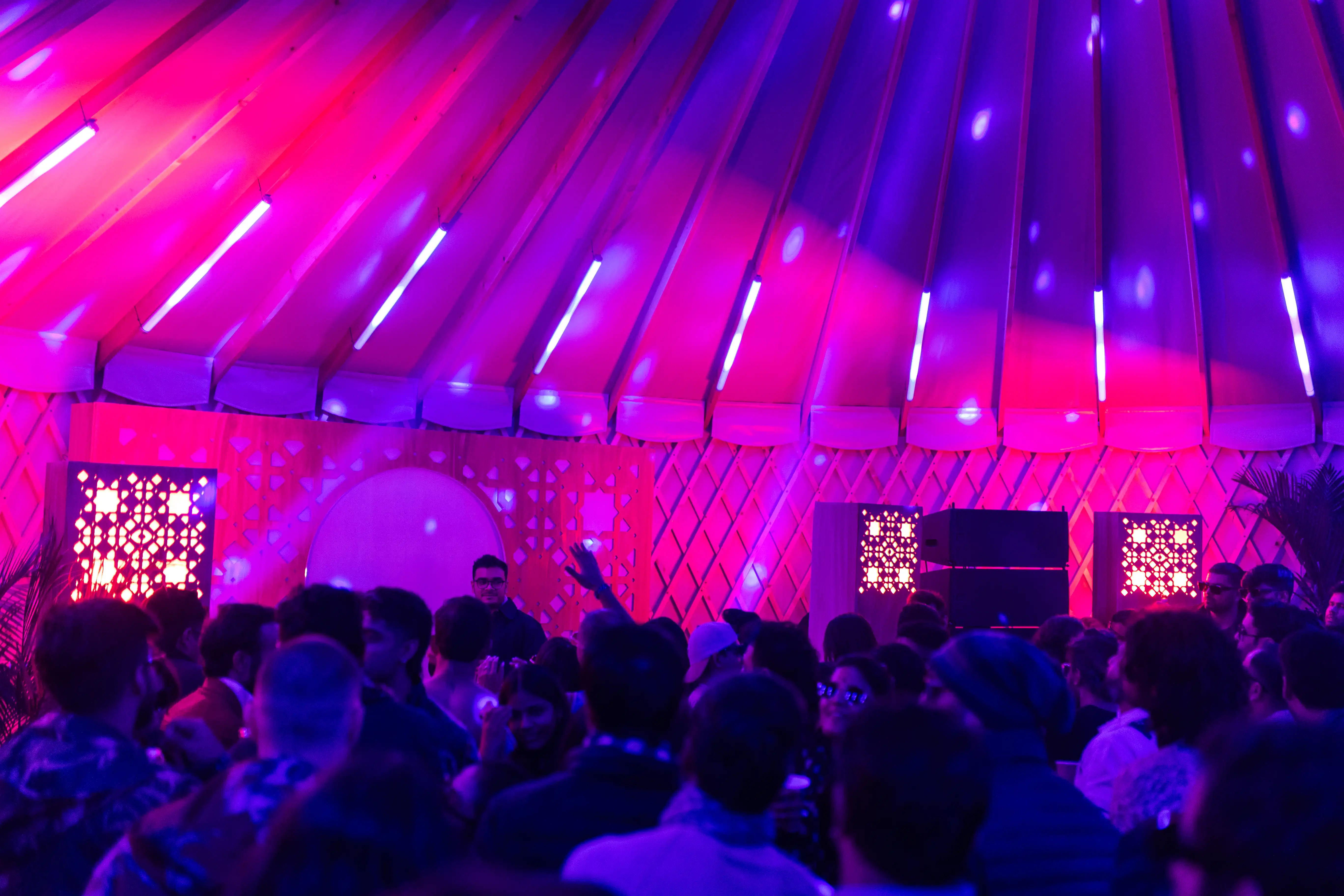
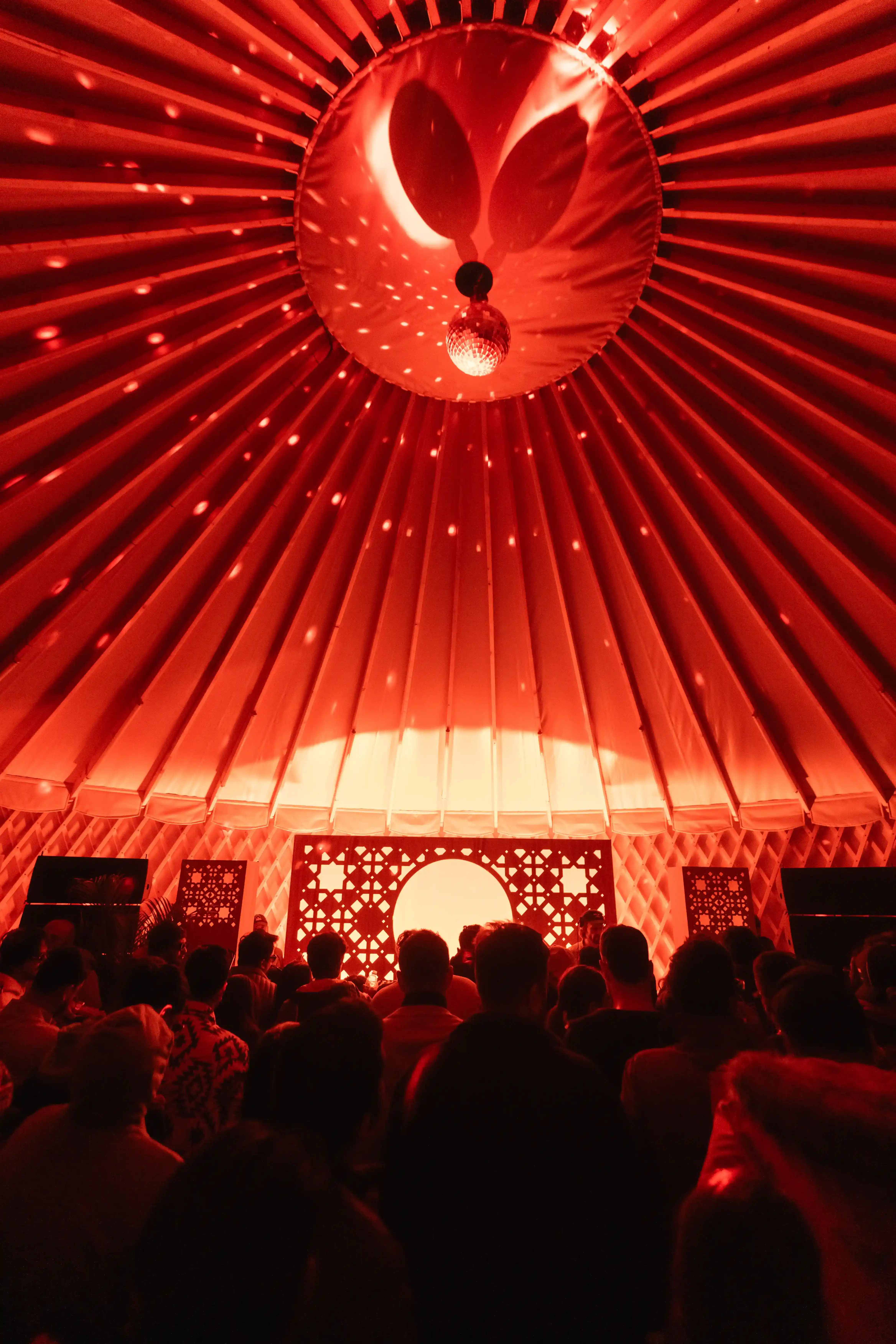
- Versatility: Yurts aren't just for accommodation. Use them as restaurants, wellness retreats, or even stunning event spaces. The options are endless.
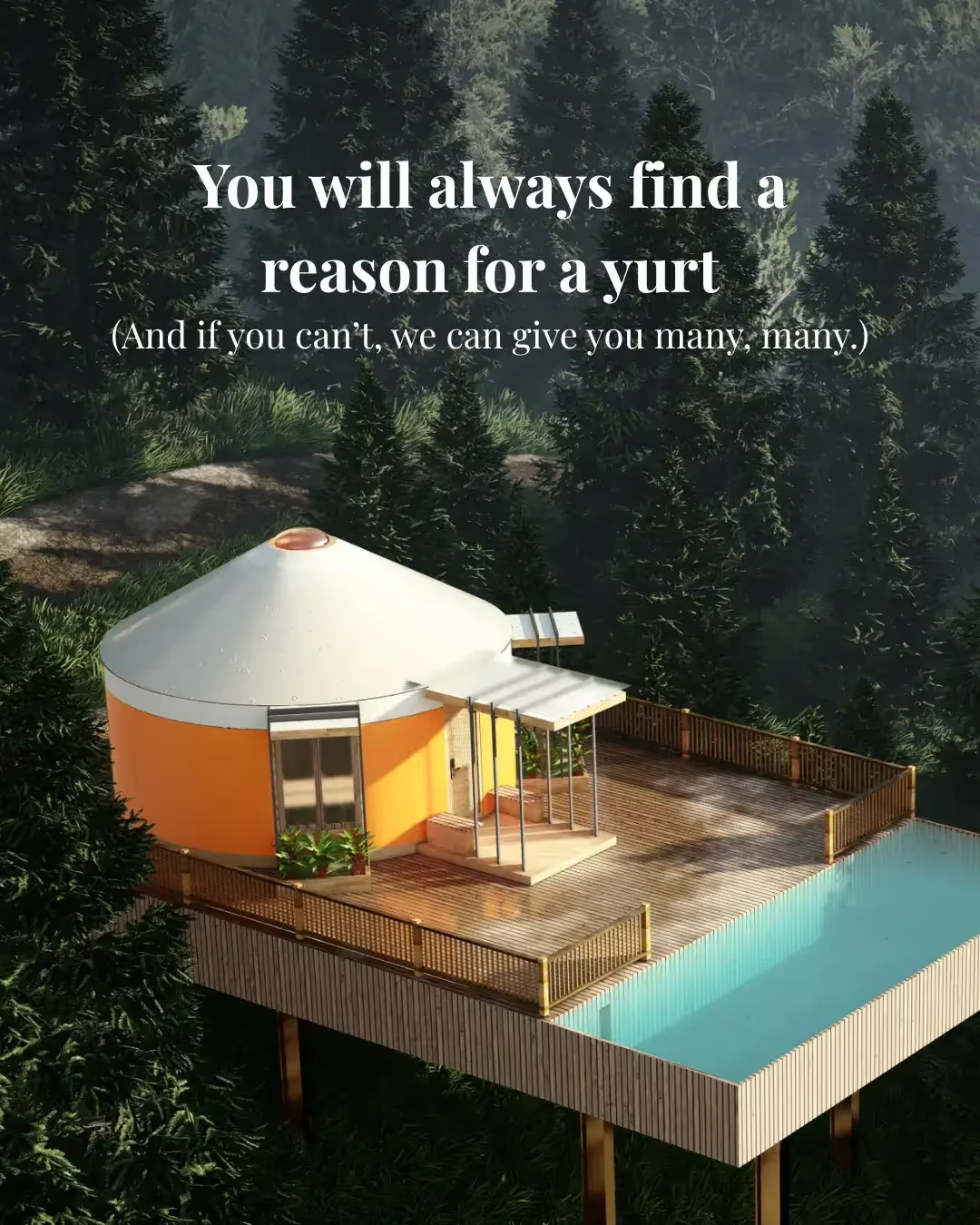
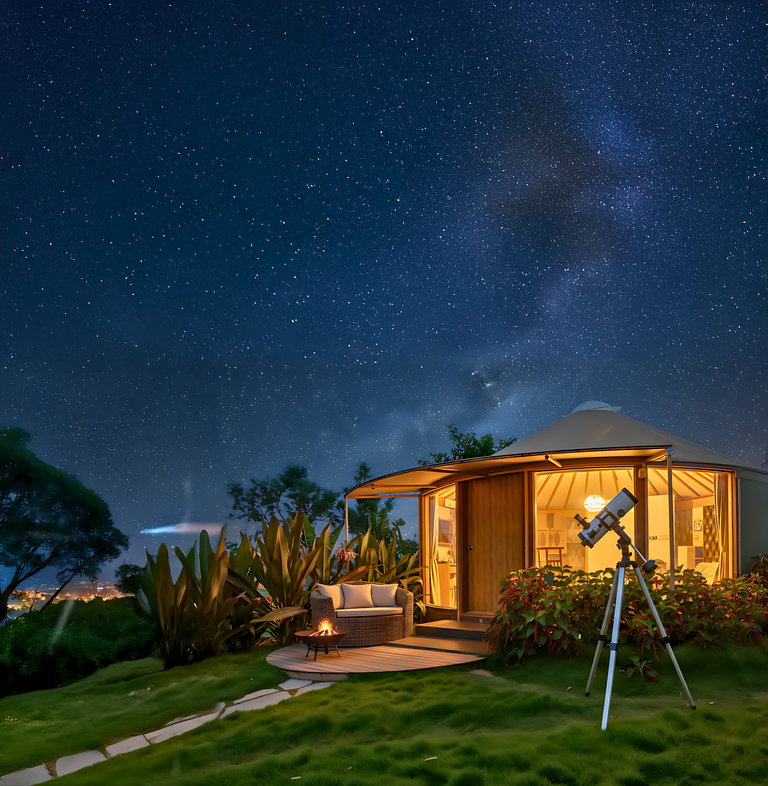
- Customization: Want a yurt with a skylight to stargaze at night? Done! Want one with a rustic, timber-framed feel or a modern, sleek design? We got you! Our team of experts lives for these challenges.
Honoring History, Engineering the Future: The Out Factory Touch
You see, at The Out Factory, we're not just in the business of making yurts—we're in the business of creating unbelievable outdoor experiences. And that's why we care so deeply about this Mongolian tale. We've taken that ancient, ingenious design and re-engineered it for the 21st century.
We honor the history by keeping the authentic soul of the yurt, but we engineer it for the future with advanced materials, precision manufacturing, and a relentless obsession with design and customization. Whether you're looking to create a tranquil nature retreat or a lively glamping hotspot, we're here to make sure that whatever you dream up, we can build it.
FAQs
1. What is the difference between a traditional Mongolian yurt and a modern yurt?
Traditional Mongolian yurts, or gers, are made with a hand-cut wooden frame and felt insulation, designed for portability. Modern yurts maintain the same brilliant structural design but use advanced, engineered materials like architectural-grade fabrics and high-performance insulation for added comfort and longevity.
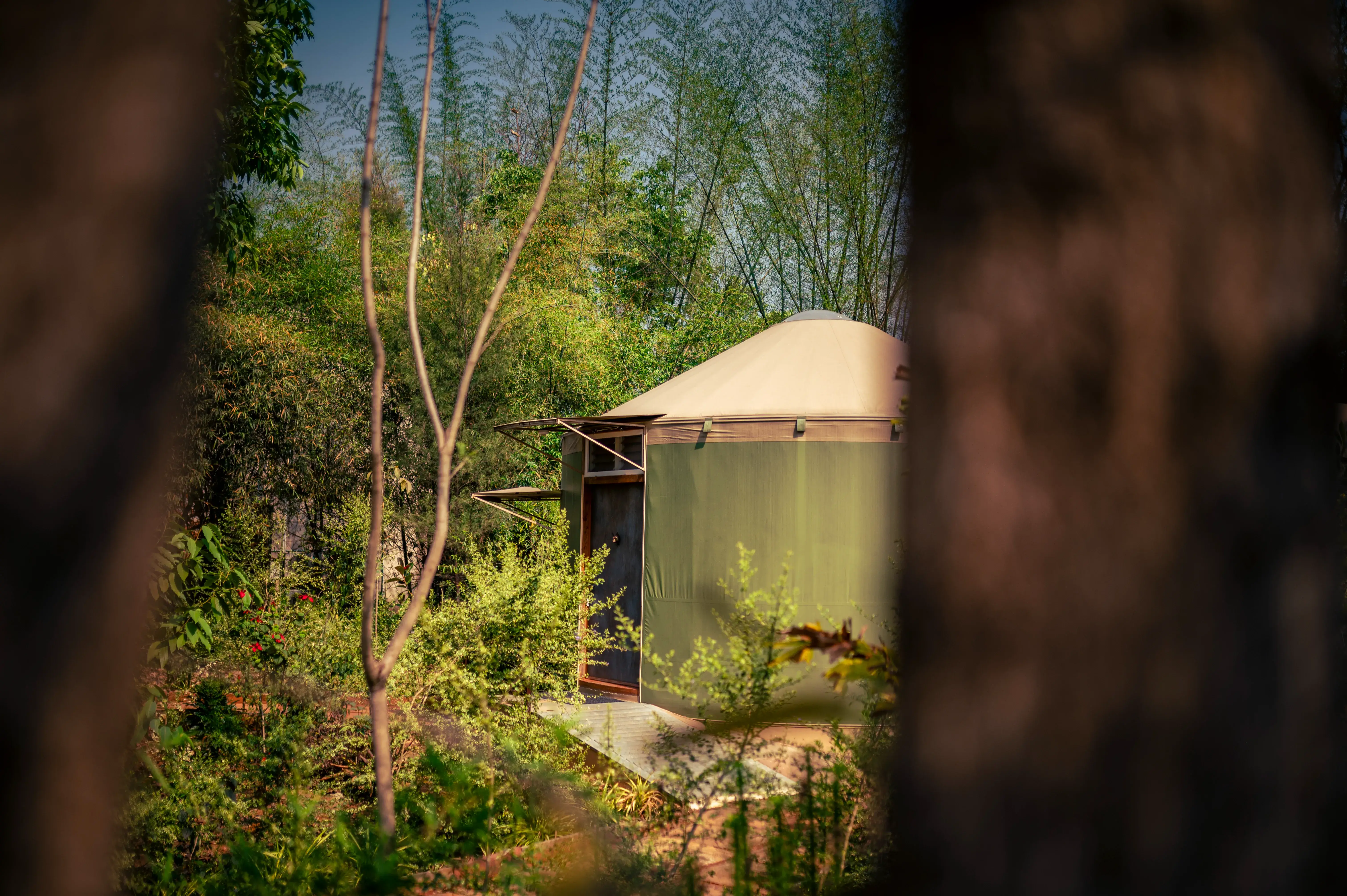
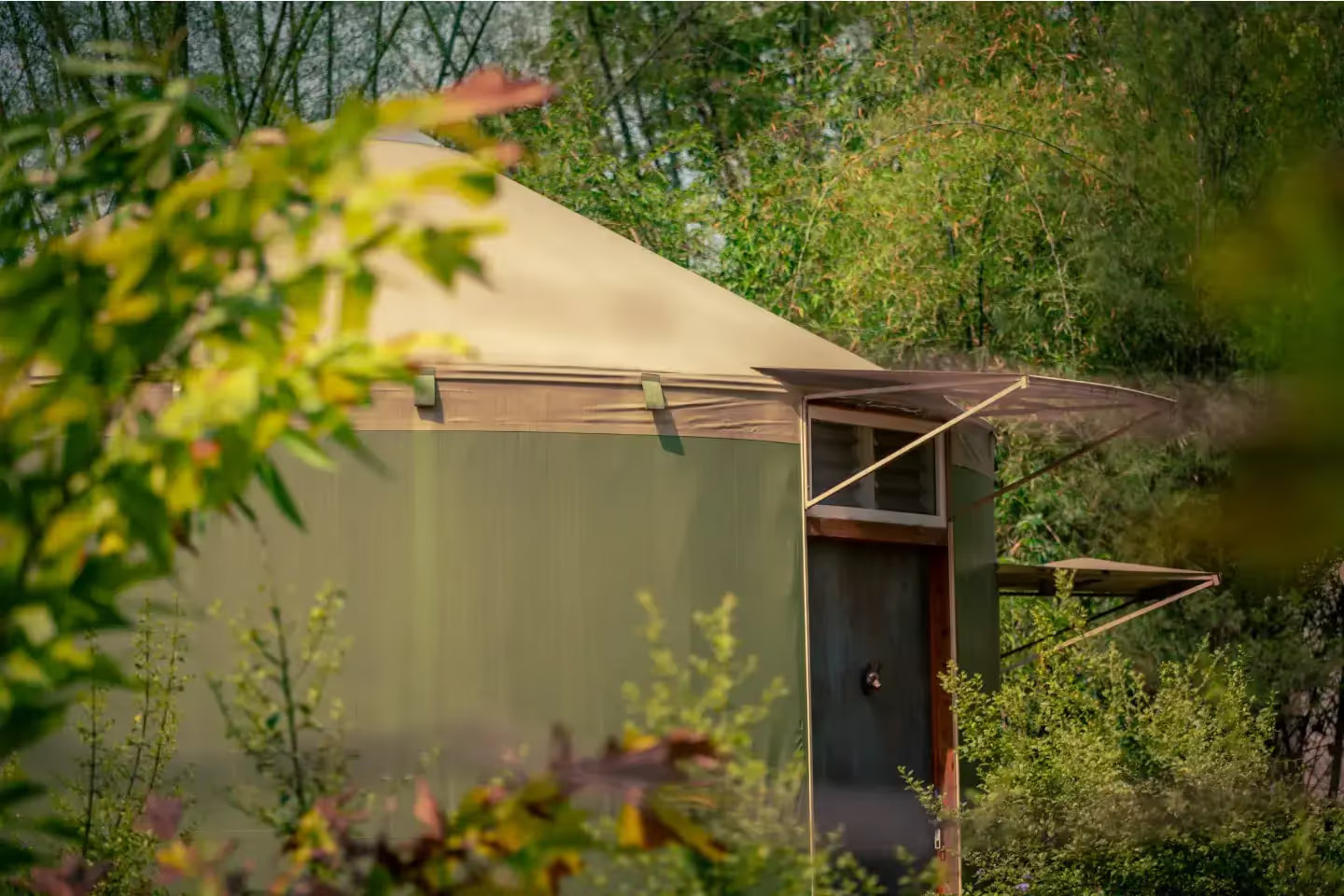
They also include modern features like large windows, solid doors, and full integration of electricity and plumbing, making them perfect for luxury glamping and permanent homes.
2. Is a modern yurt just a glorified tent?
Not at all. A tent is a temporary, recreational shelter with a lifespan of a few seasons. A modern yurt is an engineered architectural structure with a heavy-duty wood frame, multiple layers of high-performance technical fabrics, and a 15+ year lifespan. It's designed to be a permanent, four-season dwelling that can accommodate full plumbing, electricity, and air conditioning.
3. Can a yurt withstand strong winds and heavy snow?
Yes, a well-engineered modern yurt is exceptionally strong. The round, aerodynamic shape allows wind to flow around it, while the conical roof and robust frame are designed to handle heavy snow loads. For example, Out Factory yurts are engineered to withstand wind loads of up to 173mph, making them suitable for a wide range of challenging climates.
4. Are modern yurts portable like traditional ones?
While a modern yurt can be disassembled and moved, it's not "portable" in the same way as a traditional nomadic ger. Think of it as relocatable. A traditional ger was designed to be moved several times a year by a family. A modern yurt is built as a permanent structure, but with the unique advantage that it can be uninstalled and moved to a new location if your plans ever change, offering a flexibility that traditional construction cannot.
5. Is a yurt cheaper than a traditional house?
The yurt kit itself is significantly cheaper than a traditional house. However, it's important to budget for the "true cost," which includes the platform, utilities, and interior finishing. Even so, the all-in cost of a fully-finished yurt is often a fraction of the price of a conventional home, making it a powerful and attainable solution for affordable housing, ADUs, and vacation properties.
uniquely yours?
Explore Limitless options in our 3d yurt builder
and bring your vision to life

Share Blog



.jpg)
.jpg)
.jpg)
.jpg)
.png)